


Choosing imaging technology after school involves more than liking medical machines or wanting a hospital job. You need to test your interest in anatomy and physics, your comfort with patients and illness, and your willingness to follow exact safety procedures before comparing course eligibility, clinical training and career progression.
Key takeaways
- Choose imaging technology if anatomy, physics, equipment and patient care all interest you.
- After Class 10, compare diploma eligibility; after Class 12, check science-subject requirements.
- Compare X-ray, CT, MRI and ultrasound exposure before selecting a course.
- Verify affiliation, clinical training, approvals and written fee details before paying.
Would you enjoy the daily work of an imaging technologist?
You are likely to enjoy imaging technology if anatomy, radiation physics, equipment and repeated patient communication interest you equally. The work is patient-facing, not limited to viewing images on a computer, and accuracy matters during every examination.
A typical shift may involve:
- Preparing an X-ray or CT room and checking equipment.
- Confirming the patient’s name and date of birth, reviewing the referral, and asking pregnancy-related questions when relevant.
- Removing metal objects, transferring patients safely and positioning them accurately.
- Giving clear breathing or movement instructions, acquiring images, checking image quality and documenting the examination under a radiologist or senior technologist.
Before choosing a course, ask whether you can:
- Work calmly around pain, trauma, infection-control procedures and anxious patients.
- Stand for long periods, move equipment and support patients safely.
- Notice a small positioning error that could make an image unusable.
- Follow a radiation-safety or imaging protocol without taking shortcuts.
Direct patient contact is part of the job, and shifts can include early mornings, nights or weekends. If you want only computer-based image work or feel uncomfortable helping vulnerable patients, another healthcare path may fit better. A radiology course in Pune leads into hands-on clinical work, not a desk-only role.
What must you study and qualify for after Class 10 or Class 12?
Class 10 can be enough for some radiology diplomas, while a B.Sc. route normally requires Class 12 Science. The exact rule depends on the awarding body, so do not assume that every radiology course in Pune accepts the same applicants.
| Route | Usual academic entry | What to verify |
|---|---|---|
| Diploma | Class 10 or Class 12, depending on the board or institution | Minimum marks, subjects, age condition and examination authority |
| B.Sc. Radiology and Imaging Technology | Class 12 Science, with Physics, Chemistry, Biology, Mathematics or a specified combination | Required subjects, minimum percentage, entrance test and Maharashtra admission process |
PCB students must ask whether Mathematics is compulsory; PCM students must confirm whether Biology is accepted instead. A subject mismatch can block admission even when your marks are high.
Before applying, obtain the current prospectus and check:
- Minimum percentage and subject requirements
- Entrance examination and Maharashtra admission procedure
- Age condition
- Mark sheets, identity proof, leaving certificate and other required documents
- University or board issuing the final certificate
Identify that awarding authority before paying fees. Eligibility for a later course or government job depends on the qualification named in official rules, not the course title used in an advertisement. A short certificate labelled “radiology” is not automatically equivalent to the prescribed radiographer diploma or degree in a recruitment notice.
“Government approved” also means little until the institute names the approving or affiliating authority and you verify the relevant rule.
What will you practise, and how much does modality choice matter?
Competence means more than producing a scan. You will study anatomy, radiation physics, exposure factors, positioning, collimation, image-quality evaluation, infection control, documentation, emergency response and supervised equipment operation.
Expect practical training in:
- Identifying patients, reviewing referrals, asking pregnancy-related questions when relevant and positioning safely.
- Preparing patients, following CT workflows, selecting protocols and checking image quality.
- Screening for contrast risks, recognising extravasation or an acute reaction, and escalating promptly; contrast administration is not routine image acquisition.
- Using radiation protection: justification, optimisation, collimation, shielding, personal dosimeters, controlled areas and preventing repeat exposures.
| Modality | Energy or exposure | What you should check before enrolment |
|---|---|---|
| X-ray | Ionising radiation | Routine radiography, positioning and exposure selection |
| CT | Ionising radiation | Protocols, contrast precautions and workflow |
| MRI | Magnetic field and radiofrequency energy | Implant, foreign-metal, device and claustrophobia screening |
| Ultrasound | Sound waves | Probe handling and image acquisition |
| Mammography | Ionising radiation | Breast positioning and compression practice |
| Fluoroscopy | Ionising radiation | Real-time imaging and dose awareness |
| Interventional imaging | Usually X-ray-based ionising radiation | Sterile assistance, equipment and emergency workflow |
Ask which modalities appear in the syllabus and which you actually use during clinical hours. A conventional-radiography course may provide little MRI, ultrasound, mammography, image-processing or PACS experience, so compare practical hours and functioning equipment access rather than trusting “radiology” in the title.
Should you choose a diploma or B.Sc. in Radiology and Imaging Technology?
Choose the Radiology Technician Diploma if you want a shorter, focused route into supervised routine radiography or imaging support. Choose B.Sc. Radiology Imaging Technology if you can spend longer on an undergraduate qualification and want deeper study plus broader progression options.
| Option | What it means | When it applies |
|---|---|---|
| Radiology Technician Diploma | Focused preparation for supervised radiography, patient positioning, equipment operation and image acquisition | You want earlier entry-level work and accept narrower progression |
| B.Sc. Radiology Imaging Technology | Greater depth in anatomy, physiology, physics, imaging systems, quality assurance and clinical practice | You want a higher undergraduate qualification or may pursue postgraduate study |
| Either route | Does not qualify you as a radiologist | You want work as a radiographer, X-ray technologist, CT technologist trainee or imaging assistant |
Compare these before enrolling:
- Total duration and clinical-internship hours
- The equipment and modalities you will use, not merely those listed in the brochure
- Practical responsibility, supervision and the examination authority
- The university or board awarding the qualification
- Eligibility for specific jobs and postgraduate courses
Neither qualification makes you a radiologist. A radiologist is a medical doctor who completes medical training and specialist radiology training; a technologist or technician positions patients, follows protocols, operates equipment, acquires images, checks workflow and supports the radiologist’s interpretation.
Do not rely on “government approved” wording. A government recruitment notice can require a named diploma, degree, registration or experience, and a short certificate labelled radiology may not meet it. Verify the approving authority and compare the exact qualification with the recruitment rules for your target job.
How can you verify a Pune course before paying fees?
Before paying, require documents you can verify rather than relying on “government approved” wording or a course title.
- Written syllabus, including the exact modalities: X-ray, CT, MRI, ultrasound, mammography, fluoroscopy or PACS
- University or board affiliation, awarding body and examination authority
- Total clinical-training hours, placement locations and the internship completion document
- The qualification recorded on past graduates’ appointment or registration documents
| Check | Diploma route | B.Sc. route |
|---|---|---|
| Verify | Awarding board and named diploma | Affiliating university and named degree |
| Compare | Eligibility in technician vacancies | Eligibility in jobs and higher courses |
| Confirm | Supervised hours and equipment access | Supervised hours, modality breadth and progression |
Contact the affiliating university or board directly using its official website details. Ask whether the certificate qualifies you for the exact job or postgraduate course you want; “B.Sc. Radiology Imaging Technology” is not a nationally uniform curriculum.
Ask whether each clinical site operates under applicable Atomic Energy Regulatory Board requirements and e-LORA licensing arrangements. Confirm that students practise controlled-area procedures, dosimeter use, pregnancy-related screening, infection control, emergency communication, documentation and image-quality checks under supervision.
For CT or MRI, ask whether training covers contrast precautions, extravasation or acute-reaction recognition, escalation and the limits of a student’s role.
Students comparing healthcare courses in Pune can apply these checks to imaging, laboratory, ECG, nursing and operation-theatre programmes. Vishwas Institute| Best Paramedical Institute belongs in that comparison, but request its current rules and clinical details in writing. Choose the qualification that matches your academic record, intended role and progression plan.
Related product
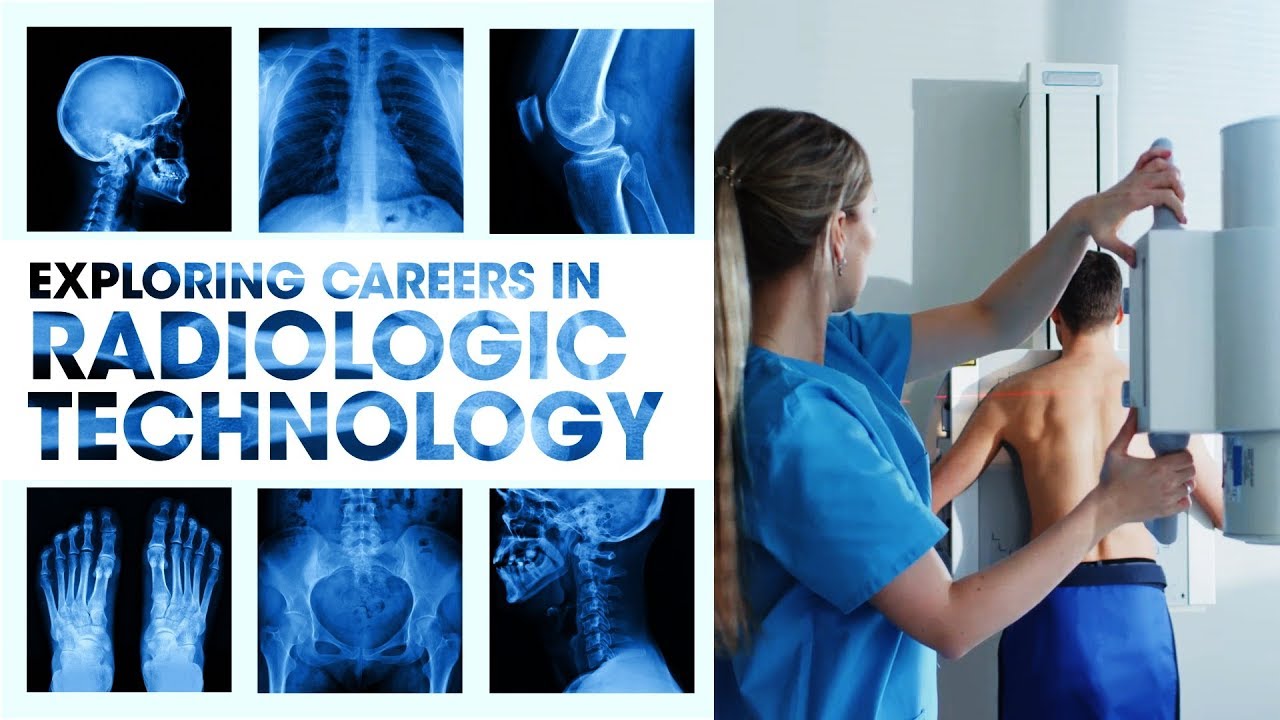 | Paramedical Courses / Radiology Technology Radiology Technician Diploma (X-Ray & CT Scan Technology) Radiology Technician Diploma (X-Ray & CT Scan Technology) Build a rewarding career in medical imaging with the Radiology Technician Diploma at... |
Frequently asked questions
Would you enjoy the daily work of an imaging technologist?
You may suit the role if you enjoy anatomy, radiation physics, equipment operation, accurate positioning and repeated patient communication. Imaging technologists work directly with patients and prepare them for examinations.
What must you study and qualify for after Class 10 or Class 12?
After Class 10, compare diploma or certificate routes and their subject requirements. After Class 12, check whether the course requires Physics, Chemistry, Biology or Mathematics, along with the stated minimum marks and admission documents.
What will you practise, and how much does modality choice matter?
Practical training can include patient positioning, exposure settings, radiation protection, image-quality checks, infection control and examination records. Ask whether the course provides supervised exposure to X-ray, CT, MRI or ultrasound because each modality uses different equipment and safety procedures.
Should you choose a diploma or B.Sc. in Radiology and Imaging Technology?
A diploma may provide a shorter, focused entry route, while a B.Sc. in Radiology and Imaging Technology offers a longer undergraduate pathway with broader academic and clinical study. Compare duration, eligibility, clinical hours, modality exposure and progression options.
How can you verify a Pune course before paying fees?
Request written proof of affiliation or recognition, the institute’s current clinical-training arrangements, faculty details, laboratory access, course duration, examination authority, refund terms and a complete fee schedule. Visit the campus and confirm that students practise with functioning equipment under supervision.