



A BSc MLT graduate supports far more than analyser operation: the work begins with patient identification and specimen acceptance, then continues through testing, quality control, result verification and documentation. By the end, you will understand how each laboratory department uses this qualification, where errors occur, and how to compare practical training before choosing a bachelor medical laboratory technology course.
Key takeaways
- Verify patient identity, tube type, volume and specimen condition before testing.
- Use barcode checks and documented handovers to preserve specimen traceability.
- Match laboratory training with real work in biochemistry, microbiology and hematology.
- Know when results require senior review, repeat testing or referral to a pathologist.
How a BSc MLT graduate moves a specimen from collection to report
A specimen becomes a reliable report through controlled handling at every stage, not through analyser operation alone. A graduate with a medical laboratory technology degree checks the sample’s identity, condition and suitability before testing begins.
1. Confirm the patient’s name, identification number, requested tests and collection time against the request form. Collect the correct specimen using the required tube, container and technique.
2. Label the tube at collection with the patient identifiers, specimen type and collection time. Transport it within the required temperature and time limits, then reject it for problems such as an unlabeled tube, clotted EDTA blood, haemolysis or insufficient volume.
3. Accession the accepted sample in the laboratory information system and assign a tracking number. Separate serum or plasma by centrifugation, then prepare urine sediments, blood films or other slides when the test requires them.
4. Perform the procedure or load the analyser according to its method sheet. This can include a complete blood count, blood glucose measurement, urine microscopy, Gram stain or culture setup.
5. Review calibration status, internal quality-control results and analyser flags before releasing technical results. Investigate a failed control, repeat the test or escalate the problem instead of reporting an unchecked value.
6. Compare results with specimen details, reference intervals and previous results when authorised, document corrective actions and release the report through the laboratory system. Clinical interpretation and diagnostic authorisation remain with the responsible pathologist or clinician.
Practical training in a BSc MLT in Pune should let students perform this complete chain under supervision, with competency and quality-control records—not merely observe machines.
Where BSc MLT applications fit across laboratory departments
BSc MLT graduates can work across several diagnostic sections, not only at analyser benches. A medical laboratory technology degree supports specimen reception, preparation, testing, quality-control documentation and result verification under authorised laboratory supervision. For people comparing bachelor medical laboratory technology in Pune options, department rotation matters because each section demands different technical skills.
| Department | Tests and procedures | Typical technical work |
|---|---|---|
| Haematology | Complete blood count, peripheral smear, ESR, coagulation tests | Run haematology analysers, prepare and stain smears, check flags and verify control results |
| Clinical biochemistry | Blood glucose, liver function tests, kidney function tests, lipid profile, electrolytes | Centrifuge serum, load analysers, perform calibration and review quality-control charts |
| Clinical pathology | Urine microscopy, stool examination, body-fluid analysis | Inspect physical characteristics, prepare sediments and slides, record microscopic findings |
| Microbiology | Gram staining, bacterial culture, sensitivity testing, fungal examination | Inoculate media, maintain aseptic technique, examine growth and document susceptibility results |
| Immunology or serology | ELISA, rapid antigen tests, antibody assays, agglutination tests | Prepare reagents, run controls and process patient samples |
| Blood banking | ABO and Rh grouping, crossmatching, antibody screening, donor testing | Label units, test compatibility and maintain transfusion records |
| Histopathology | Tissue fixation, processing, embedding, sectioning and staining | Prepare slides for pathologist review |
| Molecular diagnostics | PCR and nucleic-acid extraction | Prevent contamination, run controls and record amplification results |
Technologists perform defined procedures and technical checks; the pathologist or authorised clinician interprets findings and authorises the diagnostic report. A degree does not grant independent authority to diagnose or sign every report.
How technicians prevent unreliable results before and after testing
Reliable results depend on decisions made before the analyser starts and checks made after it stops. A wrong patient identifier, clotted EDTA sample, haemolysed serum, insufficient volume, delayed transport or contaminated container can make a precise measurement clinically misleading.
Reject, recollect or document a doubtful specimen according to the laboratory SOP; never correct it by guessing.
- Match the patient’s name, date of birth or hospital number with the request and barcode.
- Check control results, calibration status, reagent expiry, instrument flags, maintenance records and quality-control trends before releasing patient results.
- Stop reporting when controls fail. Investigate the cause, rerun controls, recalibrate or replace reagents, repeat affected patient tests, notify the supervisor and record the corrective action.
- Compare results with previous values when a delta check is available, confirm units and reference intervals, and investigate implausible values.
- Match the final result to the correct accession number in the laboratory information system, communicate critical values promptly and record who received the message.
A reporting check catches errors that a technically successful run cannot. New technicians studying bsc mlt in pune should practise specimen rejection, control-chart review, result amendments, audit trails and confidentiality, while understanding that a pathologist or authorised clinician provides diagnostic interpretation and report approval.
Safety, traceability and the limits of the technologist’s role
Daily laboratory work is governed by three controls: protect people, preserve traceability, and act only within your authorization. Wear a closed coat, gloves and eye protection for splash risks; never recap needles, place sharps in puncture-resistant containers, and segregate infectious waste from glass, chemical waste and general refuse under the facility’s biomedical-waste procedure.
Balance centrifuge buckets and report spills, exposures and equipment faults immediately.
Traceability means another trained person can reconstruct what happened to every specimen. Check two patient identifiers, match the label with the request, assign an accession number, scan the barcode, record collection and receipt times, and document rejection, processing, quality-control findings and corrective action.
In the laboratory information system, enter results carefully, communicate critical values through the approved channel, protect passwords, and never erase an amendment that belongs in the audit trail.
A medical laboratory technology degree prepares you for testing and technical verification across defined procedures; it does not make you a doctor or authorize independent diagnosis. A technologist can flag an implausible result, repeat testing, or escalate a critical value, but the authorized pathologist or clinician interprets findings and releases the diagnostic report.
When comparing bachelor medical laboratory technology in Pune programs, ask whether supervised rotations assess biosafety, waste segregation, LIS use, confidentiality and these professional boundaries—not merely analyzer operation.
How to assess practical training for BSc MLT laboratory applications in Pune
Do not judge a BSc MLT in Pune by its course title or specialization list. When comparing an allied health science institute BSc MLT in Pune, ask to see the practical timetable, laboratory logbook and anonymised competency sheets showing who supervised each task.
1. Inspect the available sections: specimen collection and venepuncture, automated haematology, clinical chemistry, microscopy, microbiology culture and antimicrobial-susceptibility testing, blood grouping and compatibility testing.
2. Confirm that students practise the complete workflow: patient identification, labelling, accessioning, transport, centrifugation, slide preparation, analyser operation, result verification and record control.
3. Check whether each rotation includes assessed tasks for specimen rejection, internal quality control, calibration checks, documentation and corrective action. A signed attendance sheet alone does not prove competence.
4. Examine biosafety records for training in standard precautions, personal protective equipment, sharps disposal, spill response, decontamination, exposure reporting and biomedical-waste segregation.
5. Ask how internship evidence is maintained. Look for dated supervisor sign-offs, procedure counts, assessment scores, feedback and remediation records rather than a certificate issued without performance details.
6. Treat ISO 15189 familiarity as a quality-system advantage, not a qualification or permission to independently interpret or authorise every report. Vishwas Institute, Best Paramedical Institute, is worth comparing on these visible records rather than promotional claims.
Related product
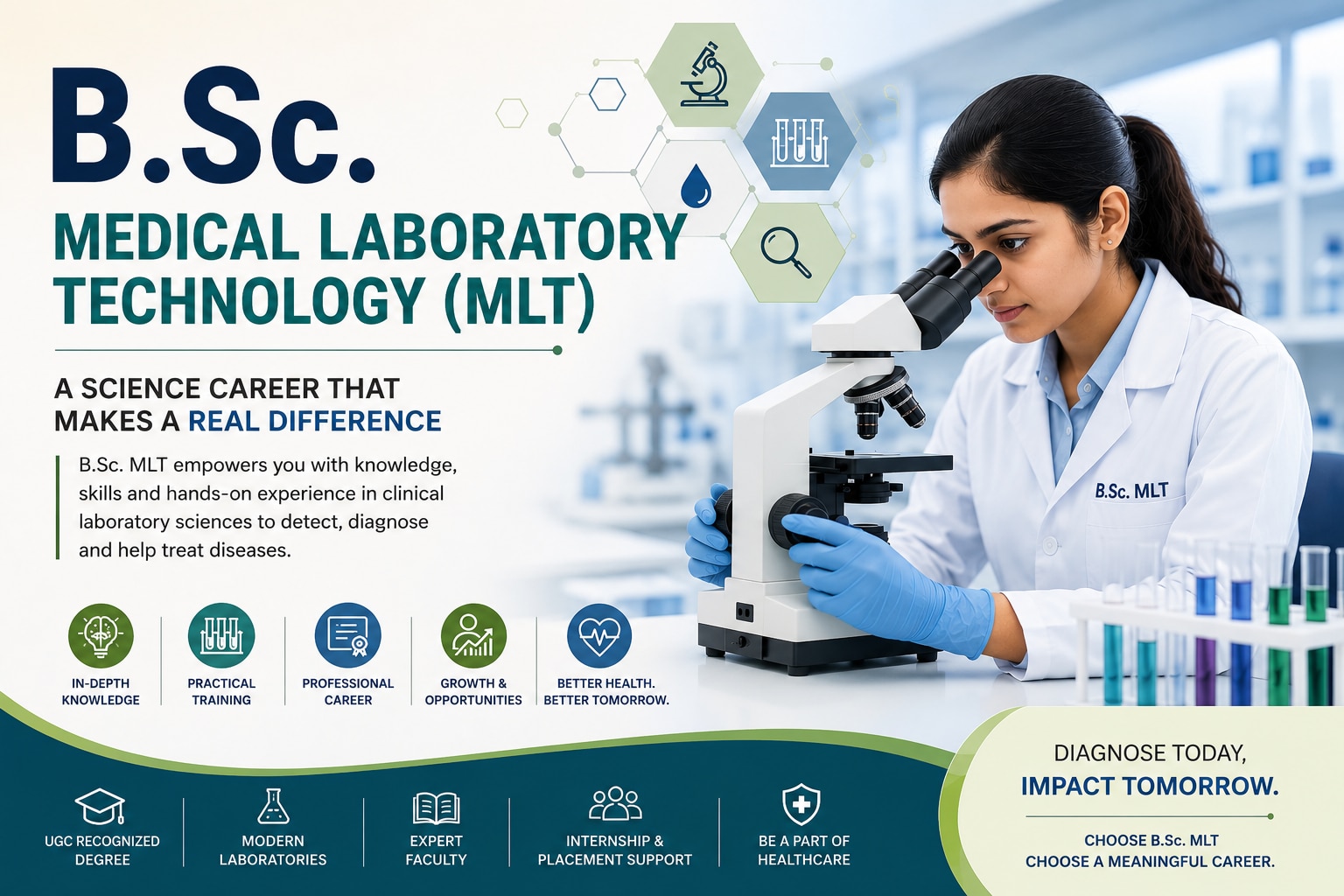 | Best Paramedical College Graduation Degree Courses BSc MLT Course – Bachelor of Science in Medical Laboratory Technology BSc MLT (Bachelor of Science in Medical Laboratory Technology) at Vishwas Institute of Paramedical Science, Pune, is a career-oriented paramedical... |
Frequently asked questions
How does a BSc MLT graduate move a specimen from collection to report?
The graduate verifies patient identity, labels the tube, checks volume and condition, records receipt, performs testing, reviews quality controls and releases the result through the laboratory system.
Which laboratory departments use BSc MLT skills?
BSc MLT skills apply in hematology, clinical biochemistry, microbiology, immunology, blood banking, histopathology, molecular diagnostics and sample collection services.
How do medical laboratory technologists prevent unreliable results?
They reject unsuitable specimens, follow standard operating procedures, run internal quality controls, investigate abnormal flags and document corrective actions before reporting.
What are the limits of a medical laboratory technologist's role?
A technologist performs and validates testing within authorised procedures but does not independently diagnose disease or replace a pathologist's clinical interpretation.
How should you assess practical BSc MLT training in Pune?
Ask whether students handle real specimens under supervision, rotate through core departments, practise quality control and use documented safety and reporting procedures.