

Choosing a radiology programme requires more than searching the exact phrase “BSc RIT.” You need to match course names, entry rules, clinical training, equipment access and qualification validity against your own career goal. By the end, you will have a keyword-led checklist for comparing programmes and questioning a college before enrollment.
Key takeaways
- Search both B.Sc. RIT and full radiology degree names.
- Confirm eligibility, entrance steps, documents and counselling deadlines.
- Compare clinical rotations, equipment access and hands-on assessment.
- Verify affiliation, recognition and the qualification awarded.
Start with the right B.Sc. RIT search terms
Search by the decision you need to make, not by promotional claims. Use course specific keywords bsc rit radiology alongside the full names B.Sc. Radiology and Imaging Technology, B.Sc. Radiography, B.Sc. Medical Radiology and Imaging Technology, radiology technician degree, and medical imaging technology degree.
These variations reveal programmes that an exact “BSc RIT” search can miss.
Add one practical or verification term to each search:
- “BSc Radiology and Imaging Technology eligibility” and “BSc RIT admission keywords” to find subject, marks, and application requirements.
- “BSc RIT syllabus” and “radiation safety training” to check whether the curriculum covers imaging technique and safe practice.
- “BSc RIT clinical internship,” “radiology internship logbook,” and “hospital posting hours” to test the depth of supervised training.
- “CT MRI clinical rotation,” “radiography lab facilities,” and “contrast media and patient care” to check access to important modalities and patient-facing skills.
- “BSc RIT university affiliation,” “BSc radiology course in Pune,” and “BSc RIT placement roles” to verify recognition, location, and actual job titles.
| Search phrase | What it helps you compare |
|---|---|
| B.Sc. Radiology and Imaging Technology | Degree naming and course scope |
| B.Sc. Radiography | Alternate radiographer-focused programmes |
| BSc RIT syllabus | Subjects and imaging modalities taught |
| BSc RIT clinical internship | Clinical exposure and supervision |
| BSc RIT university affiliation | Qualification validity and awarding body |
| BSc RIT placement roles | Technologist, radiographer, CT, or MRI roles advertised |
Check eligibility and the complete admission route
Confirm the academic requirements and selection route from the current college prospectus before submitting an application. Course titles and advertisements do not establish eligibility.
1. Check the Class 12 requirement. Ask whether the institution accepts Science with Physics, Chemistry and Biology, Physics, Chemistry and Mathematics, or either combination. Verify the minimum aggregate marks, required individual subject marks, English requirement and any age limit under “BSc Radiology and Imaging Technology eligibility.”
2. Confirm the admission method. Identify whether seats are awarded through Class 12 merit, an entrance examination, counselling, or direct institutional selection. Record the application deadline, entrance syllabus, counselling dates and seat-confirmation fee.
3. Prepare the exact documents requested: Class 10 and 12 marksheets, leaving or transfer certificate, identity proof, photographs, migration certificate where applicable, and caste, EWS, domicile or disability documents if you claim them.
4. Check the university and course details before paying. Use “BSc RIT admission keywords,” “BSc radiology course in Pune,” and “radiology technician degree” to compare prospectuses, but verify the awarding university, campus, course duration and whether the stated intake is officially approved.
5. Ask what happens after selection: document verification, medical fitness checks, original-certificate submission and refund rules. If you are targeting a government post, read the latest recruitment notice separately; it may demand a named qualification, registration, experience, age limit or reservation proof that admission alone does not provide.
Use the syllabus and skills checklist to test programme quality
A credible BSc RIT syllabus should connect imaging science with supervised patient work. It should cover:
- Radiographic physics, anatomy, physiology, pathology, positioning, exposure factors and image-quality control.
- General radiography, fluoroscopy, mammography, computed tomography and magnetic resonance imaging.
- Radiation protection, dosimetry, equipment quality assurance and radiation safety training.
- Contrast media and patient care, including screening, consent, infection control, cannulation support, monitoring and emergency response.
- PACS, DICOM, imaging documentation, ethics and communication with patients.
The course must also prove that students practise these skills, not merely study the headings.
| Area | Evidence to verify | Warning sign |
|---|---|---|
| Clinical exposure | CT MRI clinical rotation with named departments, supervisors and documented hospital posting hours | The prospectus lists modalities but gives no rotation schedule |
| Practical training | Radiography lab facilities with functioning X-ray equipment, positioning practice and image-evaluation sessions | “Hands-on training” appears without equipment or session details |
| Internship | A radiology internship logbook recording examinations, competencies, dates and supervisor signatures | Internship means observation only, with no case records |
| Career preparation | BSc RIT placement roles showing actual titles such as radiographer, CT technologist or MRI technologist | The institute reports employer numbers but not job titles |
Ask whether students independently perform positioning, select protocols, check patient identity, recognise repeat-image causes and apply dose-reduction principles under supervision. Verify how mammography and ultrasound are taught: ultrasound exposure does not automatically qualify a graduate to independently perform or interpret diagnostic sonography.
A medical imaging technology degree is credible when its practical checklist matches its BSc RIT syllabus.
Compare a B.Sc. RIT with diplomas, certificates and related courses
Choose a B.Sc. RIT when you want broad diagnostic-imaging training, a degree-level qualification and room to progress beyond routine X-ray work. Search terms such as BSc Radiology and Imaging Technology eligibility, BSc RIT syllabus and BSc RIT clinical internship help you test the programme rather than its advertising.
| Option | What it covers | When it fits |
|---|---|---|
| B.Sc. RIT | Radiography, CT, MRI foundations, patient care, radiation safety and clinical training | You want a radiology technician degree with wider progression into CT, MRI, quality assurance, teaching or administration |
| X-ray and CT scan diploma | Focused technician training in plain radiography and CT procedures | You need a shorter route into entry-level imaging work and accept narrower academic progression |
| MRI technician course | MRI operation, positioning and scanner safety | You already have a relevant foundation or want a specialised MRI pathway; confirm training on implants, projectile risks, noise and cryogens |
| B.Sc. MLT | Blood, urine, pathology, microbiology and laboratory workflows | You prefer specimen testing over imaging equipment and patient positioning |
| Certificate course | Basic, limited technical preparation | You need introductory training, not a broad qualification for long-term advancement |
A degree is not an automatic government-job licence. Match the award, registration and experience requirements in each recruitment notification, then verify BSc RIT university affiliation and the actual BSc RIT placement roles.
For a BSc radiology course in Pune or elsewhere, choose the degree when its hospital posting hours, CT MRI clinical rotation and logbook are documented. Choose a diploma or certificate only when its shorter duration matches your target job.
Verify equipment, hospital rotations and qualification validity
A “hospital tie-up” proves little unless the institute names the site, department and training schedule. Ask to visit the radiography lab facilities and confirm access to X-ray, CT and MRI equipment, not only demonstrations on campus.
- Request the hospital’s name, available modalities, approximate hospital posting hours and compulsory rotation schedule.
- Ask who supervises students: a qualified radiographer, radiology technologist or department-appointed clinical instructor.
- Inspect a sample radiology internship logbook showing dates, procedures, supervisor signatures and completed competencies.
- Confirm that the BSc RIT clinical internship includes patient positioning, radiation safety training, infection control, contrast media and patient care, and emergency workflow.
- Verify the BSc RIT university affiliation directly with the degree-awarding university, including its current approval or affiliation status and examination authority.
- Read the final certificate wording in advance; it must identify the awarding university and exact qualification, not rely on “government-oriented” language.
- Ask Vishwas Institute| Best Paramedical Institute for these records before treating its clinical arrangement as confirmed.
Search for “BSc RIT university affiliation” alongside the university’s official website, then contact its examination or registrar office using the institute’s course name. A valid B.Sc. RIT qualification prepares you for supervised imaging work; it does not make you a radiologist or authorise independent diagnostic reporting.
Treat ultrasound separately: exposure to an ultrasound department does not automatically qualify you to perform or interpret diagnostic sonography.
Related products
 | Paramedical Degree Course / Radiology & Imaging Technology Vishwas Institute B.Sc. RIT Course in Pune · Radiology & Imaging Technology Bachelor of Science in Radiology & Imaging Technology (B.Sc. RIT) at Vishwas Institute of Paramedical Science is a professional undergraduate program... |
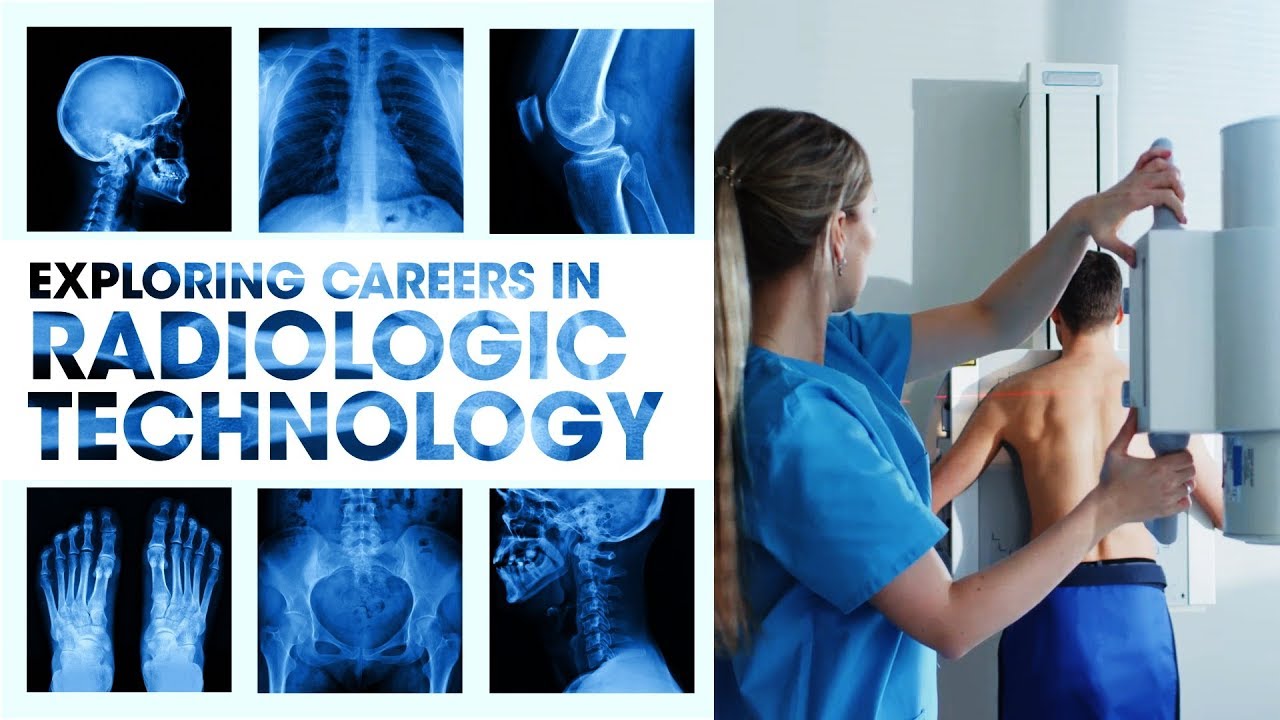 | Paramedical Courses / Radiology Technology Radiology Technician Diploma (X-Ray & CT Scan Technology) Radiology Technician Diploma (X-Ray & CT Scan Technology) Build a rewarding career in medical imaging with the Radiology Technician Diploma at... |
Frequently asked questions
Which search terms should I use for B.Sc. RIT courses?
Search course specific keywords bsc rit radiology, B.Sc. Radiology and Imaging Technology, B.Sc. Radiography, B.Sc. Medical Radiology and Imaging Technology, radiology technician degree and medical imaging technology degree.
How do I check B.Sc. RIT eligibility and admission requirements?
Check the required Class 12 subjects, minimum marks, entrance or merit route, application form, document list, counselling process and final admission deadline.
What should a quality B.Sc. RIT syllabus and skills checklist include?
Look for anatomy, physiology, radiation physics, radiographic positioning, radiation protection, patient care, image evaluation, quality assurance and supervised practical assessments.
How does a B.Sc. RIT compare with a diploma or certificate?
Compare course duration, depth of theory, clinical exposure, eligibility, assessment method, progression options and the roles each qualification supports.
What must I verify before choosing a radiology programme?
Ask about named imaging equipment, hospital rotations, clinical hours, faculty supervision, affiliation, approval or recognition, examination authority and the exact qualification awarded.