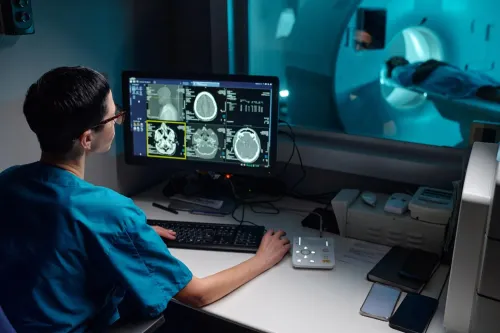



Choosing a laboratory or allied-health qualification in Pune involves more than comparing course names and advertised durations. You need to weigh entry requirements, practical exposure, recognition, early employability and long-term progression so you can select training that matches your education, time and career target.
Key takeaways
- Choose DMLT for focused entry-level laboratory preparation.
- Compare supervised practical hours, equipment access and clinical placements.
- Check eligibility, recognition documents and current recruitment rules before enrolling.
- Choose BSc or postgraduate study when your target role requires higher qualifications.
Where DMLT Offers a Faster Route into Laboratory Work
A DMLT can move you into supervised laboratory work sooner than a bachelor’s degree. The diploma in medical laboratory technology benefits in Pune include focused practical preparation rather than a broad academic route.
| Route | Entry focus | Coverage and progression |
|---|---|---|
| Certificate course | Phlebotomy, sample collection or basic assistance | Fewer departments and limited progression |
| DMLT diploma in Pune | Entry-level laboratory technician preparation | Broader practical coverage and stronger progression than a short certificate |
| General science certificate | Classroom science knowledge | Check whether it teaches laboratory procedures and employer-recognised skills |
A focused DMLT curriculum can include specimen collection, sample accessioning, centrifugation, microscopy, haematology, clinical biochemistry, microbiology, pathology, blood grouping, documentation, quality control and biosafety. It supports job oriented medical courses because each subject connects to routine diagnostic workflows.
Ask whether you will practise patient identification, tube selection, labelling, transport, storage and specimen rejection. These pre-analytical controls affect results before testing begins; a course that only displays analysers has limited practical value.
DMLT is a shorter study commitment than a degree, but its ceiling is narrower for posts requiring a bachelor’s qualification or leading to specialist, research, teaching or supervisory work. The lower academic entry barrier applies only when the awarding body permits it.
Confirm the actual Class 10 or Class 12 requirement, science subjects such as biology and chemistry, minimum marks and any entrance test before applying.
DMLT Compared with Advanced Diploma, BSc MLT and Postgraduate Study
A DMLT offers the quickest balance between structured laboratory preparation and entry-level work; a BSc MLT is usually safer when long-term eligibility matters more than speed. Compare the pathways by what they allow next, not by the title alone.
| Option | Study duration | Academic depth and practical exposure | Likely entry point | Progression ceiling |
|---|---|---|---|---|
| Certificate | Months to about one year, depending on provider | Narrow training in phlebotomy, sample collection or basic assistance | Support worker or collection assistant | Limited laboratory progression |
| DMLT | Usually 1–2 years; verify the awarding body | Job-focused training in specimen handling, haematology, biochemistry, microbiology, pathology, documentation and biosafety | Supervised laboratory technician work | Technician roles; some degree-required or supervisory posts remain closed |
| Advanced Diploma | Duration varies by institution | More content than a certificate, but depth and practical hours differ widely | Technician-level work where accepted | Not automatically equivalent to a BSc; eligibility depends on the employer |
| BSc MLT | Usually 3–4 years | Deeper biology, chemistry, immunology, molecular methods, research and management, alongside practical training | Technician and graduate-entry laboratory posts | Broader specialist, supervisory, research and teaching progression |
| PG DMLT | Postgraduate programme after a relevant degree; duration varies | Advanced diagnostic methods and specialist laboratory study | Graduate seeking advanced technical work | Specialist or supervisory routes where recognised |
| MSc MLT | Usually about 2 years after graduation | Advanced diagnostics, research, teaching and laboratory management | Graduate entering higher-level study | Strongest academic progression among these options |
A dmlt diploma in Pune suits earlier employment, while a medical laboratory technology course at BSc level better protects access to recruitment notices requiring a bachelor’s degree. PG DMLT and MSc MLT are for graduates; titles alone never establish employment eligibility. Verify each notification.
What Practical Training Should You Compare Before Enrolling?
A useful medical laboratory technology course proves competence through logged practice, not demonstrations followed by a completion certificate. Compare the written workload, laboratory hours, clinical posting, assessment format, independent study and internship duration before choosing among job oriented medical courses.
| Option | Classroom and study | Practical and clinical evidence | Assessment |
|---|---|---|---|
| Certificate | Narrow syllabus; ask for study hours | Limited departments; check logged hours and supervised sample volume | Demonstration or basic practical test |
| DMLT | Structured theory with independent assignments | Department rotation, functioning equipment and defined internship duration | Written, practical, viva and workplace records |
| BSc MLT | Deeper science and research study | Broader postings with documented laboratory work | Semester theory, practicals, projects and examinations |
Use this checklist during a campus visit and counselling call:
- Confirm practice or observation of venepuncture, sample handling, microscopy, haematology, clinical biochemistry, microbiology, histopathology and blood banking.
- Ask whether you use functioning analysers and microscopes, perform analyser operation and maintenance, and learn internal quality control, calibration or verification concepts, reference ranges, document control and corrective action.
- Require rotations through diagnostic departments under qualified supervision. An “internship” label proves little unless you see signed logs showing departments covered, duration, emergency or night workflows, permitted tasks and supervised sample volume.
- Check assessment of result confidentiality, sharps safety, spill response, personal protective equipment, exposure reporting, disinfection and biomedical-waste segregation at the point of generation. If students only watch staff work, the training has a certificate-shaped gap.
Eligibility, Recognition and Recruitment Rules Can Change the Outcome
Eligibility can decide whether a qualification leads to employment: certificate and DMLT admissions often ask for Class 10 or Class 12, biology or chemistry, minimum marks, age limits, entrance tests, or an interview. PG DMLT and MSc admission normally require a relevant bachelor’s degree, but the awarding authority sets the actual rule.
| Option | Usual admission questions | Employment implication |
|---|---|---|
| Certificate | Class 10 or 12, marks, age | Narrow support roles |
| DMLT | Class 12 science, marks, age, interview | Entry-level technician posts |
| Advanced Diploma | Class 12 science and minimum marks | Check whether employers accept its level |
| BSc MLT | Class 12 science, marks, entrance test | Degree-required recruitment |
| PG DMLT | Relevant bachelor’s qualification | Advanced or supervisory pathways |
| MSc MLT | Relevant bachelor’s or postgraduate qualification | Specialist, research or teaching pathways |
Before enrolling at a DMLT college in Pune, request written criteria and confirm the awarding authority, current affiliation, examination body, marksheet and certificate format. Institutional affiliation is not the same as government recognition, and a DMLT diploma in Pune is not automatically equivalent to a BSc.
Also ask for:
- A formal internship record showing departments, dates and supervisor signatures.
- Practical-training logs proving the training is part of the programme, not an informal arrangement.
- Recent government and private recruitment notices accepting that exact qualification.
“Government-oriented” training does not guarantee a government job. The specific advertisement controls qualification, experience, age and registration requirements, so check the target post before paying fees.
A Pune Enrolment Decision: Match the Qualification to Your Career Plan
Choose DMLT if you want structured, hands-on entry-level laboratory preparation in less time and accept a narrower ceiling for supervisory, specialist, research, teaching and degree-required posts. Choose BSc MLT if you can study longer and want broader academic progression or stronger eligibility across recruitment notices.
These are the clearest diploma in medical laboratory technology benefits in Pune, but they do not remove recruitment conditions.
| Option | Best fit | Main limitation |
|---|---|---|
| Certificate | Narrow support work such as phlebotomy or sample collection | Confirm employer acceptance and limited progression |
| DMLT | Faster supervised laboratory entry | Not automatically equivalent to a BSc |
| Advanced Diploma | Additional laboratory training after checking the awarding authority | The title alone does not establish degree-level eligibility |
| BSc MLT | Broader science, research and recruitment eligibility | Requires a longer study commitment |
| PG DMLT or MSc MLT | Graduates targeting specialist, supervisory, research or teaching paths | Requires the specified graduate qualification |
Choose a certificate only after an employer confirms acceptance. Choose postgraduate study only after meeting its graduate-entry rule. Compare radiology technician training or other job oriented medical courses against your intended job, not just their titles.
Before paying a fee at a dmlt college in Pune, request:
- Complete syllabus and department-wise practical schedule
- Faculty qualifications, laboratory access and supervised practice details
- Internship agreement, signed logs and departments covered
- Awarding authority, current affiliation and certificate format
- Recent placement records or recruitment notices accepting the qualification
Vishwas Institute| Best Paramedical Institute is one provider to evaluate with this checklist; independently verify affiliation, practical exposure and the eligibility rules for your target post.
Related products
 | Best Dmlt College In Pune Diploma Courses DMLT- Diploma in Medical laboratory Technician The medical laboratory technicians are the ones who do the blood collection and perform the various diagnostic tests by analysing body fluids like... View product → |
 | Government Dmlt College diploma course DMLT Course – Vishwas Institute of Paramedical Science Admissions Open for the DMLT (Diploma in Medical Laboratory Technology) Course at Vishwas Institute of Paramedical Science, Pune. |
Frequently asked questions
How does DMLT provide a faster route into laboratory work?
DMLT focuses on core laboratory procedures and supervised practical training, so it takes a narrower route than a bachelor’s degree. It suits learners seeking entry-level preparation in sample collection, testing support and laboratory operations.
How does DMLT compare with an advanced diploma, BSc MLT and postgraduate study?
DMLT offers focused diploma-level preparation. An advanced diploma may provide deeper technical training, a BSc MLT adds broader undergraduate study, and postgraduate programmes suit graduates targeting specialised or higher-level roles. Compare the qualification required for your intended job before choosing.
What practical training should you compare between DMLT colleges in Pune?
Ask about supervised practical hours, access to microscopes and analysers, sample-handling practice, quality-control procedures, clinical laboratory exposure and the exact certificate issued after completion.
What should you check before enrolling in a DMLT diploma in Pune?
Check the eligibility criteria, awarding body, recognition documents, examination authority, internship or placement terms and current recruitment rules. Confirm that the qualification matches the laboratory roles you plan to pursue.